Fund Transfer Strategies for EB-5 Investors from China, India, and Vietnam
How to Navigate Currency Controls and Successfully Transfer Investment Funds from Restrictive Marketslast updated Monday, January 19, 2026
#EB-5 fund transfer #EB-5 China money transfer
| | by Sidra Jabeen | Content Manager, Paperfree Magazine |
QUICK LINKS
AD
Get Access to EB 5 Investment Visa Resources
Quick Summary: What You Need to Know
If you're planning an EB-5 investment from China, India, or Vietnam, here's what matters most:
- EB-5 fund transfer China: China limits transfers to $50,000 per person annually through official channels
- India caps transfers at $250,000 per fiscal year (April-March) for residents
- Vietnam has similar strict remittance controls that complicate EB-5 funding
- You need $800,000 minimum (TEA projects) or $1.05 million (non-TEA)
- Multiple legal strategies exist to transfer funds while maintaining USCIS compliance
- Documentation is critical – every dollar must have a clear, traceable path
These three countries represent 88% of all EB-5 visas issued in 2024, so you're not alone in facing these challenges.
Understanding Why Fund Transfers Are Challenging | EB-5 Source of Funds Documentation
Before we dive into solutions, let's understand the problem. China, India, and Vietnam impose strict foreign exchange controls to protect their economies and prevent capital flight. This creates a fundamental mismatch: you need to transfer hundreds of thousands of dollars to the U.S., but your home country limits how much you can send.
The USCIS Requirements
The U.S. Citizenship and Immigration Services doesn't just want your money – they want proof that:
- Your funds came from lawful sources
- There's a complete, documented path showing how money moved from you to the U.S. investment
- Every person or entity involved in the transfer can show their funds are legitimate
This is called the "path of funds" requirement, and it's where most problems arise. EB-5 source of funds documentation is very important for the safety of investor and the family involved.
Country-Specific Transfer Limits
China: The $50,000 Annual Cap
The State Administration of Foreign Exchange (SAFE) allows Chinese citizens to exchange and remit only $50,000 per year. Recent developments have made this even more restrictive:
- Banks now limit daily withdrawals to 200,000 Yuan ($27,800)
- Multiple transactions from one account totaling over $50,000 trigger government scrutiny
- Immigration consultancy databases have been seized in government crackdowns
What this means: A single investor cannot independently fund an $800,000 EB-5 investment through official channels. EB-5 China money transfer is not that simple as it seems.
India: The $250,000 LRS Limit
Under India's Liberalized Remittance Scheme (LRS), resident individuals can transfer $250,000 per fiscal year (April 1 to March 31). Additionally:
- A 20% Tax Collected at Source (TCS) applies to all outbound transfers since October 2023
- This tax is recoverable through tax returns but affects immediate liquidity
- Non-resident Indians (NRIs) can transfer up to $1 million annually
Important distinction: If you're already in the U.S. on an H-1B or similar visa, you likely qualify as an NRI under Indian tax law, giving you access to the higher $1 million limit. EB-5 India remittance transfer can be a safe way to utilize.
Vietnam: Parallel Restrictions
EB-5 Vietnam fund transfer maintains similar currency controls that restrict foreign remittances, creating comparable challenges for EB-5 participants.
Legal Fund Transfer Strategies
Strategy 1: Family and Friends Pooling Method
This is the most common approach, especially for Chinese and Indian investors.
How it works:
- You transfer funds in local currency to trusted family members or friends
- Each person uses their annual remittance allowance to send funds abroad
- All funds eventually reach your designated U.S. account
- From there, you transfer to the EB-5 project
Example: A Chinese investor might use 16-20 people, each sending their $50,000 annual limit. An Indian investor might need 4-5 people sending $250,000 each.
Critical documentation needed:
- Bank statements showing your transfer to each helper
- Each person's source of funds documentation
- Statements showing their transfer to your U.S. account
- Gift letters or loan agreements explaining the relationship
- Identity documents for every participant
From experience, USCIS has become significantly more stringent about these transactions. They're now requesting detailed source of funds documentation for every single person involved, not just the primary investor. Plan ahead and collect documents from everyone who will help – including cousins, siblings, parents, and even close friends.
Common mistakes to avoid:
- Using people who can't document their own income/savings
- Missing bank statements for any step of the transfer chain
- Unclear relationship documentation between you and helpers
- Transfers that appear coordinated without proper explanation
Strategy 2: Currency Swap Arrangements
Swap transfers involve working with third-party exchangers who operate across borders.
How it works:
- You deposit local currency into a designated account (individual, company, or money service business)
- The third party sends equivalent U.S. dollars from their overseas account to your foreign account
- You then transfer funds to your EB-5 investment
The advantage: You bypass direct currency conversion limits in your home country.
The challenge: USCIS increasingly questions whether these arrangements violate foreign currency control laws. Recent Requests for Evidence (RFEs) specifically ask:
- Whether the swap violated China's Article 255 of Criminal Law (unauthorized foreign exchange)
- Whether it violated India's Foreign Exchange Management Act (FEMA) and LRS
- Whether the arrangement constitutes an "informal value transfer system" (IVTS)
What usually works: Obtaining a legal opinion letter from a licensed attorney in your home country. This letter should analyze whether your specific swap transaction violated local laws. Under legal precedent, USCIS must give "due regard" to qualified expert testimony.
Important limitation: USCIS doesn't have jurisdiction over foreign laws, but they use potential violations to challenge whether your funds are "lawfully obtained" under EB-5 regulations.
Strategy 3: Hong Kong Transfer Route (Chinese Investors)
This method has historically worked for Chinese investors:
Process:
- Open a bank account in Hong Kong
- Visit a currency exchange shop that provides a mainland bank account number
- Make a domestic transfer within China to that account
- Receive equivalent funds in your Hong Kong account in foreign currency
- Transfer from Hong Kong to the U.S.
Required documentation:
- Affidavit from the third party explaining their operation
- Proof of the legitimate business providing the exchange service
- Complete banking records for all steps
AD
Get Access to EB 5 Investment Visa Resources
Strategy 4: Loans Against Foreign Property
This strategy is gaining popularity among Chinese investors who previously purchased property outside China.
How it works:
- Take a loan against residential or commercial property you own abroad
- Transfer these loan proceeds to the U.S.
- Document both the original property purchase and the loan
Documentation required:
- Source of funds used to buy the original property
- Loan agreement and terms
- Property valuation
- Bank records showing loan disbursement
This is particularly useful given the current liquidity concerns in mainland China, where banking restrictions have tightened considerably.
Strategy 5: Staged Transfers (Indian Investors)
Indian investors can strategically time transfers to maximize their LRS allowance:
Timing strategy:
- Transfer $250,000 by March 31
- Transfer another $250,000 starting April 1
- Repeat over multiple years if needed
Tax optimization: By spreading transfers across fiscal years, you can plan for the 20% TCS and manage its impact on your tax liability. Remember, this tax is fully recoverable through your Indian tax return.
Special Considerations for Concurrent Filing
If you're already in the U.S. on a valid visa (H-1B, L-1, F-1), concurrent filing offers significant advantages:
Benefits:
- File your I-526E petition and adjustment of status simultaneously
- Receive work authorization and travel document (combo card) within 2-3 months
- Avoid consular processing and its unpredictability
- Maintain control over your case within the U.S. immigration system
Fund transfer advantage for Indians: As an NRI, you can likely access the $1 million annual transfer limit instead of the $250,000 resident limit.
Important timing rule: Be in the U.S. for at least 90 days before filing your adjustment of status to avoid visa fraud concerns.
Handling USCIS Scrutiny: What to Expect
From practice, here's what typically happens when USCIS reviews your fund transfers:
Request for Evidence (RFE) Common Issues
They'll ask about:
- Gaps in the documented path of funds
- Source of funds for third-party exchangers
- Potential violations of foreign currency control laws
- Why you chose alternative transfer methods over official channels
Building a Strong Response
Include these elements:
- Complete transaction timeline – Every step documented with dates and amounts
- Bank statements for all parties – Showing both debits and credits
- Legal opinion letter – From a qualified foreign attorney addressing currency law compliance
- Relationship documentation – For all family/friends involved
- Narrative explanation – Clear, straightforward description of why these methods were necessary
From experience, honesty and transparency work far better than trying to minimize or hide the complexity. USCIS officers understand that these transfer restrictions exist. What they need is proof that you worked within legal parameters.
Understanding Sanctions and Special Licenses
Investors from countries facing U.S. sanctions (Iran, Russia) face additional complexity:
The Iran exception: The Office of Foreign Assets Control (OFAC) provides a general license (31 CFR Part 560) specifically allowing Iranian nationals to participate in EB-5. This carve-out recognizes the legitimate investment pathway.
For Russian investors: Sanctions focus on specific banks and entities. If your funds don't pass through sanctioned institutions, you may not need special permission. However, always check current OFAC regulations.
When you need an OFAC license:
- Funds held at a specifically sanctioned bank
- Transactions involving blocked entities
- Transfers through countries with comprehensive sanctions
This is when to consult a professional: Immigration attorneys experienced with sanctioned countries should review your specific situation and may obtain legal opinions from OFAC specialists.
The Digital Currency Alternative | EB-5 Currency Swap
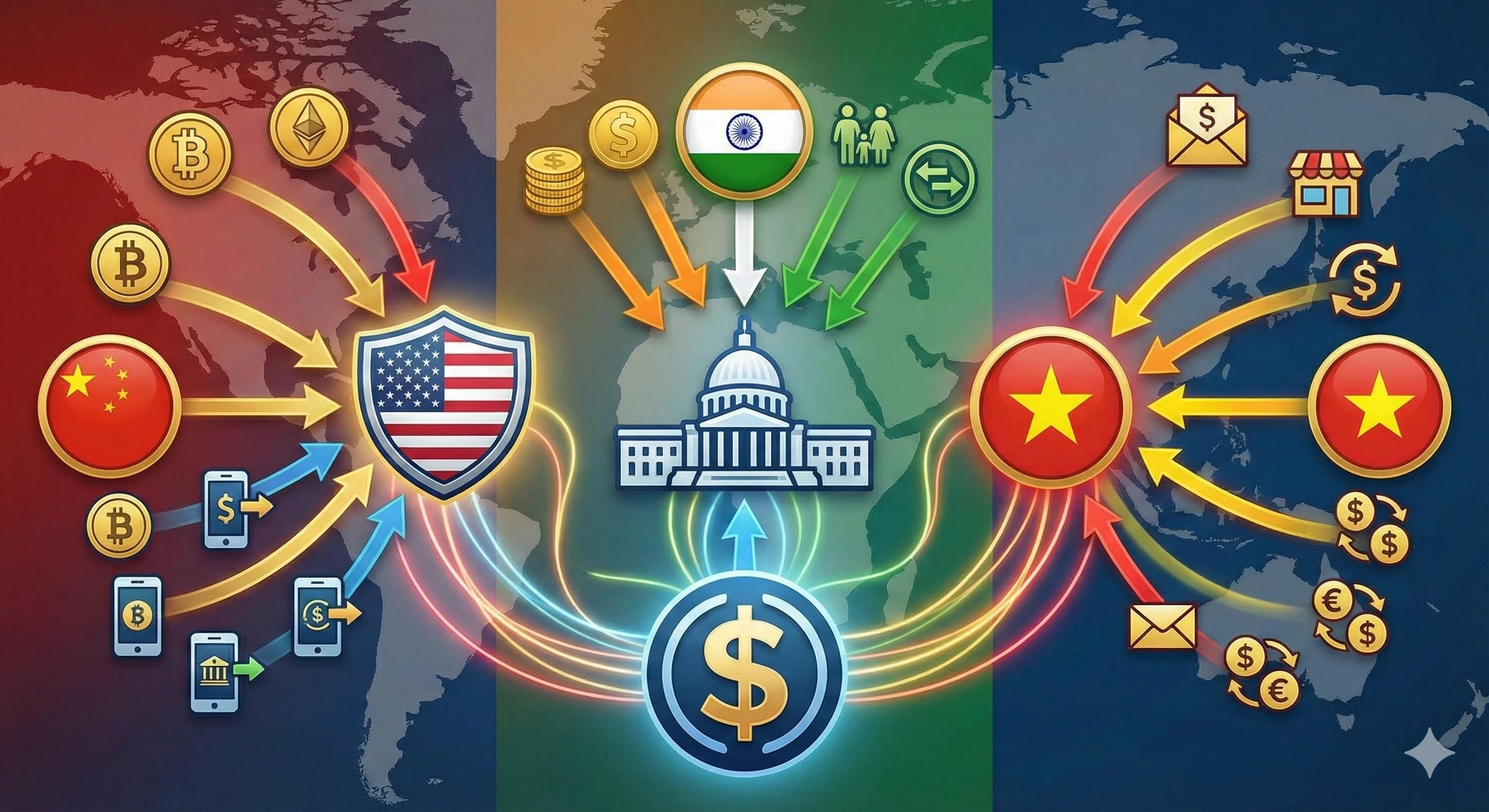
Some investors have explored using cryptocurrency (Bitcoin, Ethereum) to bypass traditional banking restrictions. This is also known as EB-5 currency swap.
The theory:
- Convert local currency to cryptocurrency
- Transfer digital currency internationally instantly
- Convert to U.S. dollars at an American exchange
- Fund your EB-5 investment
The reality in 2026:
While technically possible, this approach faces significant challenges:
- China banned international cryptocurrency exchanges (though peer-to-peer trading continues)
- Extreme price volatility could reduce your investment below minimum thresholds
- Purchase limits on U.S. exchanges restrict how much you can buy weekly
- USCIS documentation requirements become more complex
- Regulatory uncertainty about whether cryptocurrency path of funds satisfies requirements
Expert tip: Unless you already hold substantial cryptocurrency and can document its source, traditional banking methods remain more reliable for EB-5 purposes.
Step-by-Step Transfer Process
Here's a practical roadmap:
Step 1: Assess Your Situation (2-4 weeks)
- Calculate exact amount needed (investment + fees + taxes)
- Determine your residency status for tax purposes
- Identify potential family/friend helpers
- Consult with EB-5 attorney and local tax advisor
Step 2: Choose Your Strategy (1-2 weeks)
- Based on your country, amount, and timeline
- Consider combining strategies if needed
- Plan for USCIS documentation requirements from the start
Step 3: Begin Documentation Collection (Ongoing)
Start gathering now, before any transfers:
- Personal bank statements (2+ years)
- Income tax returns
- Employment records or business documentation
- Asset ownership proof
- Identity documents for all participants
Step 4: Execute Transfers (3-12 months)
- Follow your chosen strategy meticulously
- Save every receipt, confirmation, and statement
- Maintain a master spreadsheet tracking all movements
- Keep copies of everything in multiple formats
Step 5: Prepare Your I-526E Package
Work with your attorney to compile:
- Source of funds documentation
- Path of funds documentation
- Legal opinion letters (if applicable)
- Gift letters or loan agreements
- Third-party documentation
Common Mistakes and How to Fix Them
Mistake 1: Starting Transfers Before Documentation Planning
The problem: You rush to move money, then struggle to document everything after the fact.
The fix: Meet with your EB-5 attorney before the first transfer. Create a documentation checklist and gather evidence as you go.
Mistake 2: Using Helpers Who Can't Document Their Funds
The problem: Your cousin helps by sending $250,000, but has no legitimate source for that amount.
The fix: Pre-qualify everyone who will help. Verify they can document their own income, savings, or assets before involving them.
Mistake 3: Incomplete Bank Statements
The problem: Missing statements for even one month can break the chain of custody.
The fix: Request certified copies of all statements from banks immediately. Don't rely on online access that might expire.
Mistake 4: Informal Gift Arrangements
The problem: Family members help without proper gift letters or legal documentation.
The fix: Even for family, create formal gift letters stating:
- Exact amount
- Date of gift
- Donor's source of funds
- Statement that it's a gift with no repayment expected
- Relationship to you
Mistake 5: Ignoring Tax Implications
The problem: India's 20% TCS catches you by surprise, or you trigger gift taxes in the U.S.
The fix: Consult tax professionals in both countries before executing your strategy. Plan for tax recovery timelines.
Expert Tips from Immigration Practitioners
Tip 1: Document Even Obvious Things
That gift from your parents? Document it. That domestic transfer within China? Save the record. USCIS wants to see everything.
Tip 2: Use Original Sources When Possible
Company blogs, government websites, and official bank letters carry more weight than secondary sources or translations.
Tip 3: Get Legal Opinions Proactively
Don't wait for an RFE to get a foreign legal opinion. Include it with your initial I-526E filing, especially if using swap transfers or other alternative methods.
Tip 4: Maintain a "War Chest" of Extra Documentation
Collect more evidence than you think you'll need. Having additional bank statements or employment records available makes RFE responses faster.
Tip 5: Consider the 90-Day Rule for Concurrent Filing
If you're in the U.S. and planning concurrent filing, ensure you've been here legally for 90+ days. This demonstrates you didn't enter with immigrant intent on a non-immigrant visa.
Frequently Asked Questions
Q1: Can I use multiple strategies to transfer my EB-5 investment funds?
Yes, absolutely. Many investors combine approaches – for example, using family pooling for part of the amount and a property loan for the rest. The key is documenting each method clearly and ensuring the complete path of funds is traceable. Your attorney can help structure a multi-method approach that satisfies USCIS requirements.
Q2: How long does the fund transfer process typically take?
This varies significantly by country and strategy:
- China (family pooling): 6-12 months due to annual limits and coordination among multiple helpers
- India (staged transfers): 4-8 months, depending on fiscal year timing
- India (NRI status): 2-4 months with the higher transfer limit
- Swap transfers: Can be faster (1-3 months) but require more careful documentation
Start your planning at least 6-12 months before you want to file your I-526E petition.
Q3: What happens if USCIS denies my petition due to fund transfer issues?
You have several options:
- Appeal the decision if you believe it was incorrect
- File a motion to reopen with additional documentation
- Refile with strengthened evidence, addressing the specific concerns raised
- Consult with specialized attorneys who handle complex source of funds cases
Recent court cases (Battineni v. Mayorkas, Zhou v. Noem) have provided some favorable precedents for investors facing third-party exchanger documentation challenges.
Q4: Is the 20% TCS in India a permanent cost or can I recover it?
The Tax Collected at Source is fully recoverable when you file your Indian tax return for that fiscal year. It's essentially a prepayment of taxes, not an additional cost. However, it does affect your immediate liquidity – you'll need to have 20% extra available upfront, which you'll recoup later. Work with an Indian tax advisor to understand the timing and ensure you claim the credit properly.
Q5: Should I work with a money service business or individual exchanger for swap transfers?
Licensed money service businesses generally provide better documentation and are easier to defend to USCIS because they operate legally in your home country. Individual exchangers may offer convenience but create more scrutiny. Whichever you choose:
- Verify they can provide detailed transaction records
- Obtain their business licenses or credentials
- Get a written explanation of their service
- Include a legal opinion that their operations comply with local law
The quality of documentation matters more than the type of exchanger.
Your Next Steps
Transferring EB-5 investment funds from China, India, or Vietnam requires careful planning, meticulous documentation, and often creative problem-solving. While the currency controls in these countries create real challenges, thousands of investors successfully navigate them every year.
Start here:
- Consult with an experienced EB-5 immigration attorney – preferably one who regularly handles cases from your specific country.
- Meet with a tax professional in your home country to understand implications.
- Begin gathering documentation now – even before finalizing your strategy.
- Create a detailed timeline working backward from your desired filing date.
- Build your team of helpers if using family pooling, and pre-qualify their documentation.
Remember: The most successful EB-5 applications aren't those that hide complexity – they're the ones that address it head-on with comprehensive, honest documentation.
The challenges are real, but they're not insurmountable. With proper planning and professional guidance, you can successfully transfer your investment funds while maintaining full USCIS compliance.
When to Seek Professional Help
Consult professionals immediately if:
- Your funds involve sanctioned countries or entities.
- You're using swap transfers or IVTS.
- Your source of funds is complex (multiple businesses, inheritance, gifts).
- You've already received an RFE or NOID.
- You're uncertain about your NRI status (Indian investors).
- Your timeline is tight and you need concurrent filing.
The investment in professional guidance – both legal and tax – typically pays for itself by avoiding denials and delays that would cost far more.
Your EB-5 journey begins with successfully moving your funds to the United States. Take the time to do it right, and you'll build a solid foundation for your entire immigration case.

Pages Related to #EB-5 fund transfer
- EB 5 investment projects list USA | Paperfree Market

- Papefree EB5 investors magazine your source for EB5 insights. EB5 News.

- EB5 Investment Visa Guide 2025

- Best EB5 Regional Center List | American EB5 Regional Center

- Paperfree Investment Visa EB-5 Program is Your Your Clear Path to Green Card USA

- US Immigration: Big increase in EB–5 visa fees proposed

- EB 5 Visa Requirements 2026 ( updated ), A Guide to Eligibility for U.S. Investment-Based Residency

- EB-5 Regional Center Program 2027 Expiration: Secure Your Green Card Before Deadline | Renewal Updates

Popular Page
Benefits of the EB-5 Visa Program| A Comprehensive Guide
Book a Free Complimentary Call
real estate investing Investment Visa USA Investment Magazine Private Real Estate Funds real estate funds