| | by Sidra Jabeen | Content Manager, Paperfree Magazine |
EB-5 Set-Aside Visas Are Running Out — Here's What Chinese & Indian Investors Must Do Right Now
The window is closing faster than most lawyers are telling you. This is the definitive 2026 guide to EB-5 set-aside backlog risk, filing timelines, and how shifting U.S. immigration policy affects your path to a green card — and the broader job market.last updated Monday, March 9, 2026
#Set-Aside Backlog #EB-5 Set-Aside Backlog
AD
Get Access to EB 5 Visa Investment Projects
EB-5 set-aside categories — designed to protect investors from China and India — are absorbing unprecedented demand. Immigration attorneys and USCIS watchers are sounding alarms that retrogression may arrive sooner than expected. If you're planning to file mid-2026, your timing decision could cost you years.
What Are EB-5 Set-Aside Categories?
The EB-5 Reform and Integrity Act of 2022 carved out reserved visa allocations from the annual 10,000 EB-5 visas to direct investment toward underserved communities:
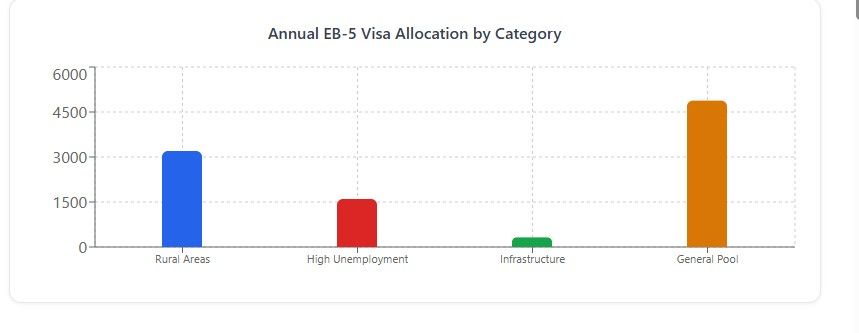
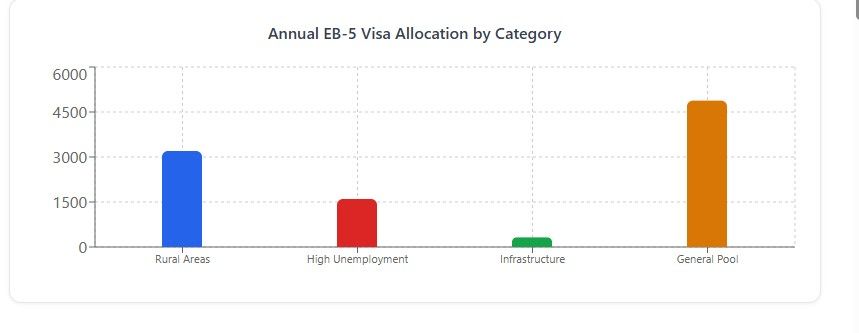
- Rural Areas — 20% — ~3,200 visas per year
- High Unemployment TEAs — 10% — ~1,600 visas per year
- Infrastructure — 2% — ~320 visas per year
- General Pool — 48% — ~4,880 visas per year
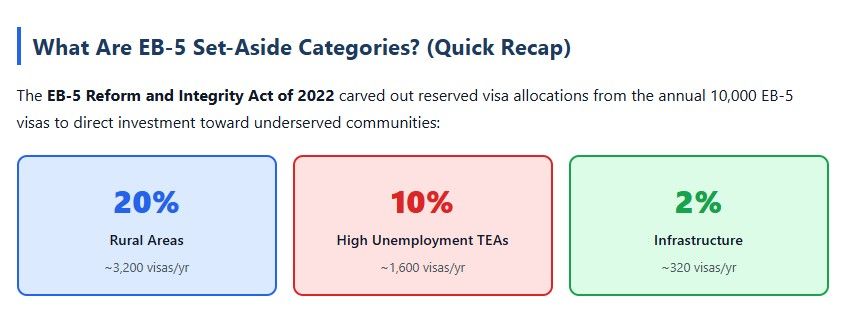
These set-asides were initially exempt from per-country caps, making them a lifeline for investors from backlogged countries like China and India. That exemption is now the very thing fueling the backlog risk.
Will EB-5 Set-Aside Categories Go Into Backlog?
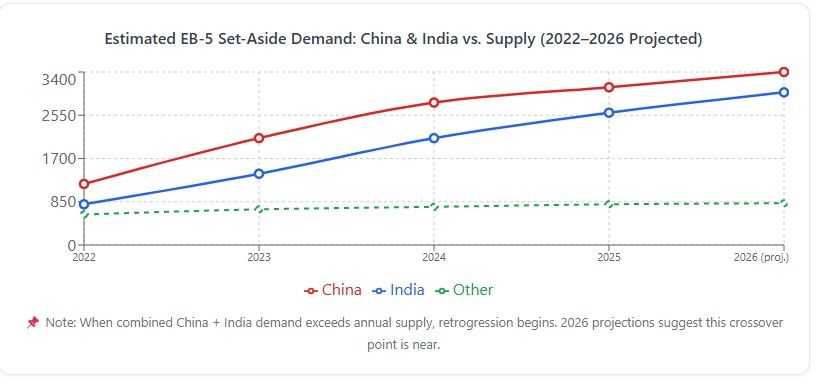
This is the question every Chinese and Indian investor is asking in 2026. The straightforward answer: retrogression is no longer a question of "if" — it's a question of "when."
Three key drivers are accelerating the risk:
1. Surging Demand from China and India. Both countries have historically dominated EB-5 filings. Now that set-asides offer a faster path exempt from per-country caps, investors from these nations are flooding set-aside projects — particularly rural ones. The estimated combined demand from China and India is projected to cross the rural supply cap of 3,200 visas in 2026.
2. Limited Rural Project Availability With only ~3,200 rural visas per year and high demand, quality rural projects are filling up faster than ever. New regional centers are launching rural projects monthly just to meet demand, but supply remains fixed.
3. Legal Ambiguity Around Rollover Rules Unused set-aside visas can roll to the general pool — but courts and USCIS continue to debate exactly how this works. This uncertainty makes long-term filing predictions difficult and adds risk to any delay strategy.
If You're Filing in 2026: The Timeline Risk Broken Down
Based on the real question being asked by families from China and India right now — deciding between a June vs. July 2026 filing due to a planned international trip — here is the honest risk breakdown:
- January–March 2026 — Low Risk. File now to minimize the risk of backlog. The window is open.
- June 2026 — Moderate Risk. Each week matters. Do not delay without a specific reason.
- September–December 2026 — High Risk. High probability of retrogression being in effect by this point.
Practical advice for the June vs. July dilemma:
A one-to-two-month delay matters more than it did two years ago. Priority dates can move backward without warning once retrogression hits. If your HELOC won't be ready until April, use the time to finalize your project selection and complete due diligence. Consider whether your international trip can be shortened or rescheduled. Your priority date is locked at filing — not approval. Ask your attorney specifically whether filing I-526E concurrent with I-485 is possible in your situation, which can protect your place in line even during retrogression.
How U.S. Immigration Policy in 2026 Is Reshaping the Job Market
The EB-5 backlog conversation does not exist in a vacuum. Broader immigration policy is directly reshaping which workers are available, which industries are struggling, and what the future of U.S. labor looks like.
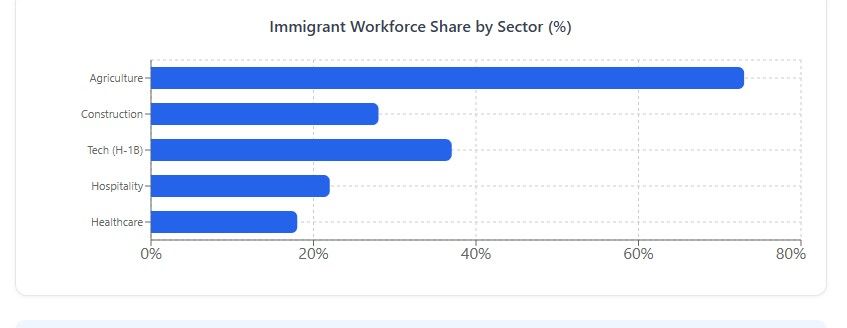
Immigrant Workforce Share by Sector:
- Agriculture — 73%
- Tech (H-1B) — 37%
- Construction — 28%
- Hospitality — 22%
- Healthcare — 18%
Construction & Agriculture: Labor Gaps Are Real With tighter enforcement and reduced legal immigration pathways, industries relying on immigrant labor are reporting growing shortages in 2026. This is driving up project costs — including some EB-5 regional center projects. 1 in 4 immigrant-dependent jobs currently sits unfilled.
Tech Sector: H-1B Uncertainty Continues High-skilled immigrant workers in tech face ongoing uncertainty with H-1B policy volatility. Many are now considering EB-5 as an alternative path to permanent residency rather than waiting on employer-sponsored green cards that can take decades for applicants from India and China.
AI & Automation: The Bigger Picture As the broader debate notes, AI and automation may ultimately displace more jobs than immigration ever could. For EB-5 investors, this makes choosing a project tied to durable, automation-resistant industries all the more important when evaluating regional centers.
The Wage Debate Research shows that while immigration can reduce wages for some comparable native workers in specific sectors, it produces a net increase in overall U.S. income. The real issue in 2026 is not whether immigrants take jobs — it is whether policy is creating structural labor gaps that harm economic output.
5-Step Action Plan for China & India EB-5 Investors
Step 1 — File as early as realistically possible. Your priority date is everything. Every month of delay is a gamble. If your finances and project selection are ready, do not wait.
Step 2 — Prioritize rural set-aside projects. Rural projects carry the highest annual supply (3,200 visas) and currently the lowest retrogression risk. They should be your first consideration in 2026.
Step 3 — Ask your attorney about concurrent filing. If adjustment of status is available to you, filing I-526E and I-485 concurrently can protect work and travel authorization even if your priority date later retrogresses.
Step 4 — Monitor the Visa Bulletin every month. The State Department's monthly Visa Bulletin is the earliest signal of retrogression. Subscribe and read it every single month without fail.
Step 5 — Vet your Regional Center carefully. In 2026, USCIS scrutiny of regional centers has intensified. Ensure yours is fully compliant and financially sound — not just fast to approve.
Key Stats at a Glance
- 3–7 years — Projected wait for China investors if retrogression hits
- +42% — Rural EB-5 projects launched in 2025
- +31% — EB-5 filings from India year-over-year (2025 to 2026)
- 1 in 4 — Immigrant-dependent jobs currently unfilled in the U.S.
- 73% — Share of U.S. agricultural workers who are immigrants
- $800,000 — Minimum rural EB-5 investment in 2026
Bottom Line
The EB-5 set-aside window for Chinese and Indian investors is open — but it is narrowing. If you're planning to file in 2026, the difference between June and July could be more consequential than it seems. The job market disruptions caused by broader immigration policy are simultaneously pushing more skilled workers toward EB-5 as their preferred path, increasing competition for the same limited visa pool.
Act with urgency, choose rural projects where possible, and work with an attorney who is watching the Visa Bulletin in real time — not one who last updated their advice in 2023.
Disclaimer: This article is for informational purposes only and does not constitute legal or financial advice. Always consult a licensed immigration attorney for guidance specific to your situation.


Pages Related to #Set-Aside Backlog
- How to Spot and Avoid Hard Money Scams

- [closed] CMF. Cedar Multifamily Fund
![[closed] CMF. Cedar Multifamily Fund](https://d2sv4n3pfes7l9.cloudfront.net/file_paperfree_144_2020-8-21-19-57-p_pf-avatar.jpg)
- Papefree EB5 investors magazine your source for EB5 insights. EB5 News.

- EB5 Investment Visa Guide 2025

- Best EB5 Regional Center List | American EB5 Regional Center

- Paperfree Investment Visa EB-5 Program is Your Your Clear Path to Green Card USA

- US Immigration: Big increase in EB–5 visa fees proposed

- EB 5 Visa Requirements 2026 ( updated ), A Guide to Eligibility for U.S. Investment-Based Residency

Popular Page
Benefits of the EB-5 Visa Program| A Comprehensive Guide
Book a Free Complimentary Call
Search within Paperfree.com
real estate investing Investment Visa USA Investment Magazine Private Real Estate Funds real estate funds